The Fireplacehouse Journal
Choosing a media wall fire: width, depth and viewing sides
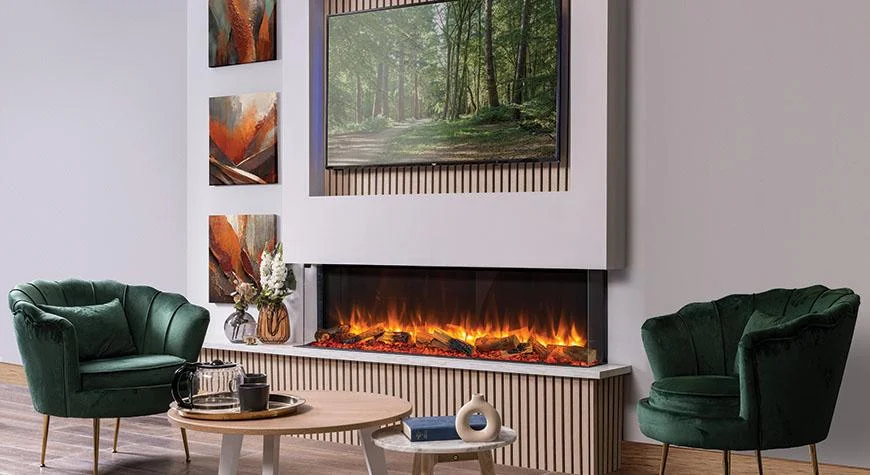
A media wall fire needs to work with the television, the seating and the room’s available depth. Start with those measurements before choosing a flame width. A well-proportioned arrangement should also leave room for maintenance and future changes.
TV size is not TV width
A television’s advertised size measures its screen diagonally. A 65-inch screen with a 16:9 aspect ratio is approximately 144cm wide before allowing for the casing. Measure your actual television rather than matching the fire to the number on its box.
Compare that width with the visible flame opening, not only the overall appliance width. The glass, trim and installation opening may all have different dimensions. Matching the fire and television is one option, but neither has to be exactly the same width.
Mark out the whole arrangement
Use removable tape to show the proposed television, fire and outer wall edges. Sit in your usual position and check the screen height. Adding a fire beneath a television should not push the screen into an uncomfortable position.
Mark the depth on the floor too. This makes the loss of room space visible before construction starts. A slim appliance may help, but the finished wall depth also depends on the specified cavity, structure, finishes and installation requirements.
Choose viewing sides that have a purpose
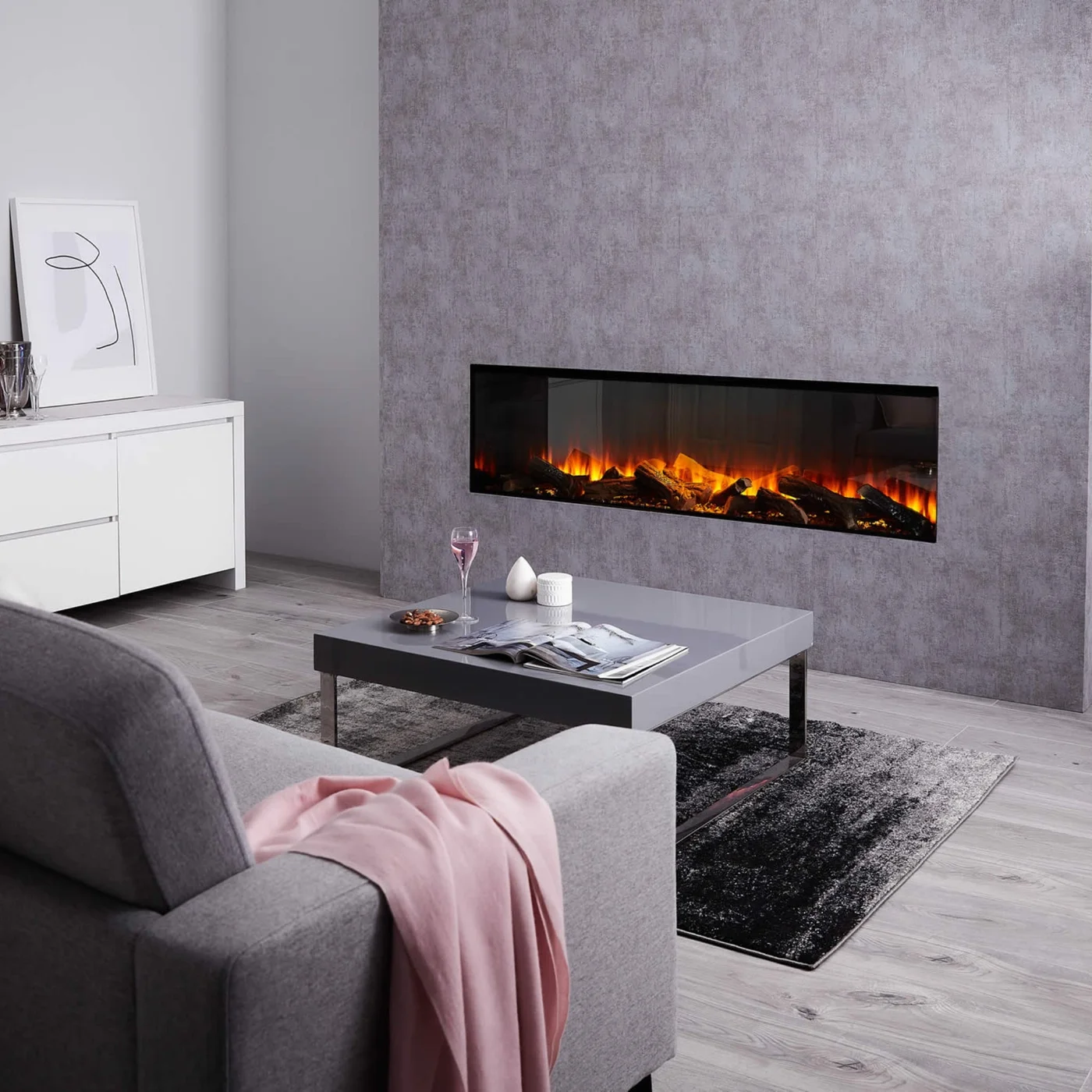
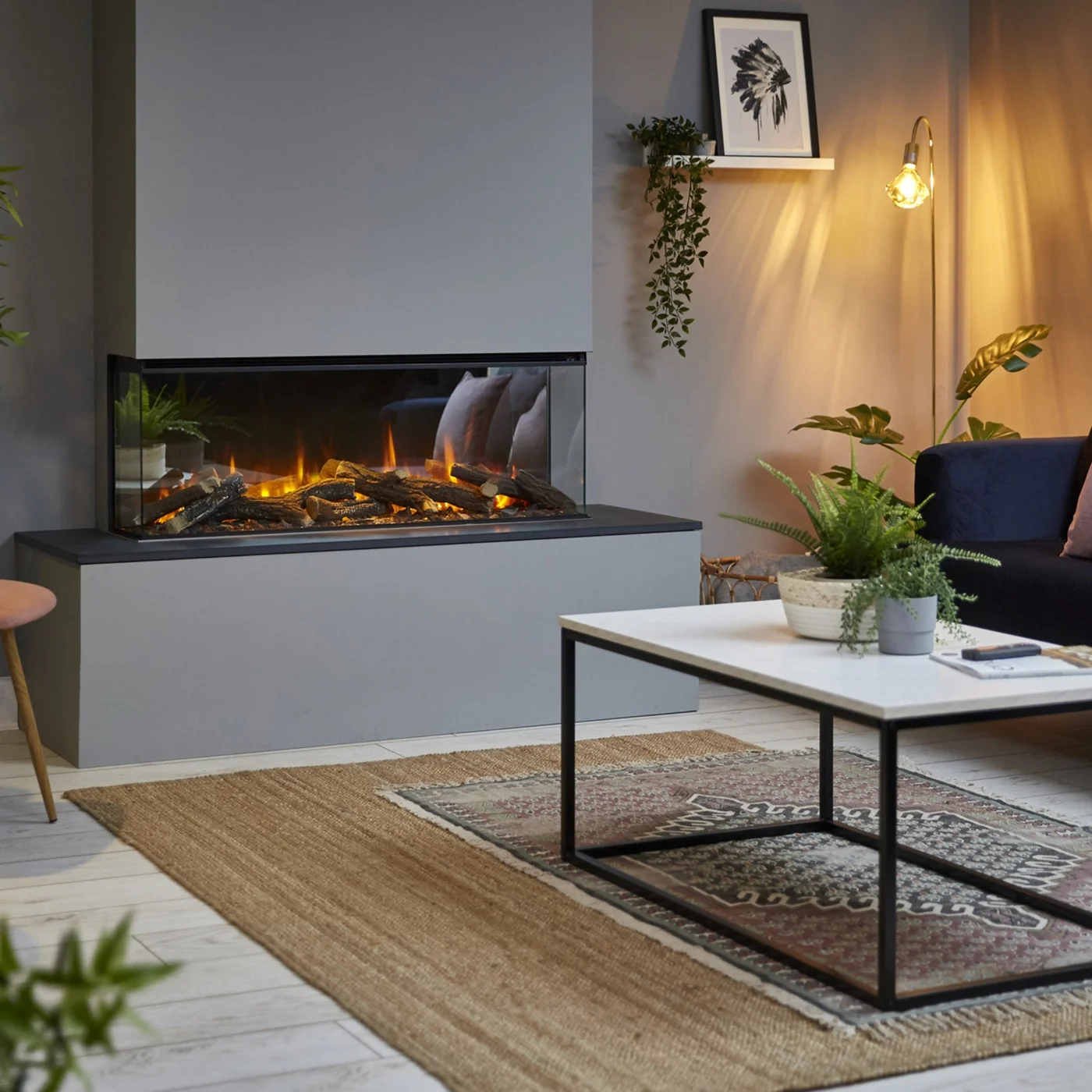
A front-facing fire suits a straightforward central arrangement. A corner or three-sided fire can make sense where its side views are visible from seating or an entrance. Paying for extra glass is less useful if the room layout hides it.
Confirm that the exact model supports the intended configuration. Do not assume every appliance can be converted between one, two and three visible sides.
Design access before the wall is finished
Ask how the fire can be serviced, how the television can be removed and how sockets and cables will be reached. Allow for a different television in future rather than boxing the current model into an unnecessarily tight recess.
Use the selected fire and television manufacturers’ instructions to establish clearances and ventilation. There is no universal safe gap for every combination. British Fires’ New Forest manual, for example, includes model-specific installation and access requirements; it is not a substitute for the current manual of your chosen fire. British Fires: New Forest installation manual (model-specific example).
Keep the surrounding design restrained if flexibility matters: fewer fixed recesses and ornamental details leave more freedom to change the room later.
Next step: compare media wall fires using visible flame width, overall dimensions, installation depth and service access.